Learning and the Law of Intensity
Originally published on: March 25, 2024
Learning and the Law of Intensity
The law of intensity emphasizes the importance of creating highly engaging and immersive learning experiences for adults. It recognizes that adults learn best when fully engaged, actively participating, and challenged to think critically. By applying the principles of the law of intensity, we can design and deliver learning experiences that captivate our attention and promote active engagement.
This article will delve into the law of intensity, its relevance to adult learning, and practical strategies for applying this principle in educational settings. We will also explore the critical elements of stimulating learning environments, the importance of real-world relevance, the benefits of collaborative learning, the power of personalization, and the significance of reflection and application.
By the end of this article, you will have a deeper understanding of how the law of intensity can transform your learning experiences. You will be equipped with practical strategies and insights to create stimulating and engaging learning environments that allow you to reach your full potential.
Key Takeaways:
Unlock your potential with the law of intensity in adult learning.
Create engaging and immersive learning experiences for deeper impact.
Design stimulating learning environments that enhance adult learning.
Connect learning outcomes to real-world applications for better motivation and retention.
Foster collaboration and create a supportive learning community among adults.
The Six Laws of Learning
When it comes to instructional design, the six laws of learning serve as fundamental principles that guide the creation of effective instruction. These laws play a crucial role in facilitating learning. They must be taken into consideration when designing instructional materials and activities. (Click on a law to learn more.)
The Law of Exercise:This law emphasizes the importance of repetition and practice in learning. The more frequently a stimulus and response are associated, the stronger the association becomes.
The Law of Effect: This law states that positive reinforcement increases the likelihood of repeated behavior, while negative reinforcement decreases it.
The Law of Readiness: According to this law, learners must be mentally and physically ready to learn to effectively acquire and retain information.
The Law of Primacy: The law of primacy dictates that information learned first is more likely to be remembered and have a lasting impact.
The Law of Intensity: This law suggests that intense and emotionally charged experiences are more memorable and impactful for learners.
The Law of Recency: The law of recency emphasizes that information learned most recently is more likely to be retained and recalled.
Introducing the Law of Intensity
In this post, we will explore the concept of the law of intensity and its significance in the realm of adult learning. The law of intensity emphasizes the importance of creating highly engaging and immersive learning experiences. By leveraging the power of intensity, instructional designers can ignite a sense of curiosity, motivation, and passion within adult learners.
"The law of intensity: It's about creating highly engaging and immersive learning experiences."
To understand the law of intensity, we must first recognize that adults have unique characteristics and needs when it comes to learning. They bring a wealth of knowledge, experience, and responsibilities that shape their approach to education. As such, adult learners demand a learning environment that is dynamic, challenging, and stimulating.
"Adult learners thrive in environments that push them to their limits, fostering deep engagement and transformative learning experiences."
At the core of the law of intensity is the belief that adult learning should be more than just a passive transfer of information. Instead, it should be an immersive and interactive process that captivates learners' attention and promotes active engagement. By harnessing the law of intensity, instructional designers can create learning experiences that leave a lasting impact on learners' lives.
To illustrate the essence of the law of intensity, let's explore an analogy. Imagine you are watching a movie – a film that evokes strong emotions, takes you on an exhilarating journey, and immerses you in its captivating storyline. This type of intense cinematic experience is what adult learners deserve in their educational pursuits.
"Just as a powerful movie engages our senses and leaves us transformed, the law of intensity aims to do the same in adult learning."
Intense learning experiences stimulate learners' cognitive, emotional, and sensory faculties, allowing them to connect deeply with the content and derive meaning from it.
These experiences activate multiple areas of the brain, fostering enhanced retention, critical thinking, and problem-solving skills.
"Law of intensity: Creating transformative adult learning experiences through highly immersive and engaging approaches."
By leveraging this principle, instructional designers can unlock the full potential of adult learners, paving the way for profound knowledge acquisition and personal growth.
Applying the Law of Intensity
When it comes to adult learning, applying the law of intensity can profoundly impact the effectiveness of educational experiences. By designing and delivering learning opportunities that captivate learners' attention and promote active engagement, we can enhance the transformative power of adult learning.
So, how can we apply the law of intensity in practice? Let's explore some practical strategies:
Incorporate multimedia elements: Integrating multimedia such as videos, images, and interactive content can stimulate multiple senses and make the learning experience more immersive and engaging. By presenting information in different formats, we cater to various learning preferences and enhance knowledge retention.
Foster active participation: Encourage learners to actively engage in learning by incorporating hands-on activities, group discussions, and problem-solving tasks. By providing opportunities for collaboration and interaction, we create a dynamic learning environment that sparks curiosity and promotes deeper understanding.
Provide immediate feedback: Offering timely and constructive feedback is essential for adult learners to gauge their progress and adjust their learning strategies. Whether through self-assessment tools, peer evaluation, or instructor feedback, learners can gain valuable insights and make the necessary adjustments to enhance their learning outcomes.
Promote real-life application: Anchoring learning in real-life contexts helps adults see the practical relevance of what they are learning. By connecting theoretical concepts to real-world examples and applications, we foster motivation and encourage learners to apply their knowledge in meaningful ways.
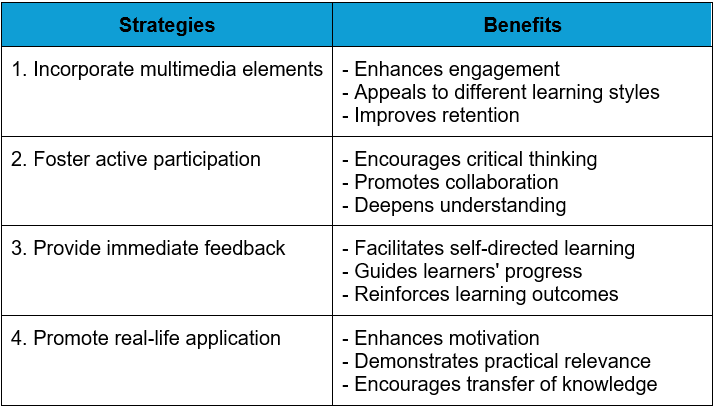
By incorporating these strategies into our adult learning initiatives, we can create highly effective and transformative experiences. The law of intensity empowers us to design learning environments that captivate, engage, and inspire adult learners on their educational journeys.
Creating Stimulating Learning Environments
When it comes to adult learning, creating stimulating environments is essential for achieving meaningful educational experiences. By incorporating key elements such as technology, multimedia, and interactive activities, we can enhance the learning process and facilitate a deeper level of engagement for adult learners.
Technology plays a crucial role in today's learning landscape. By leveraging digital tools and platforms, we can offer adult learners access to a wealth of resources, interactive simulations, and virtual experiences that bridge the gap between theory and practice. Whether it's online courses, webinars, or immersive virtual reality experiences, technology enables us to deliver dynamic and engaging learning opportunities.
Multimedia is another vital component of creating stimulating learning environments. By integrating videos, audio recordings, and visual materials, we can cater to diverse learning preferences and reinforce key concepts. Multimedia adds variety to the learning experience and appeals to different senses, making the educational content more memorable and impactful for adult learners.
"The integration of technology and multimedia in adult learning not only fosters engagement but also encourages active participation and collaboration among learners." - Susan Johnson, Education Specialist
In addition to technology and multimedia, interactive activities are crucial in stimulating adult learning. By incorporating practical exercises, group discussions, and problem-solving tasks, we can create an environment that encourages active participation and critical thinking. Interactive activities provide opportunities for hands-on learning, enabling learners to apply their knowledge and acquire new skills in a meaningful context.
To illustrate the benefits of creating stimulating learning environments, let's take a look at a table that highlights the role of technology, multimedia, and interactive activities in enhancing adult learning experiences:
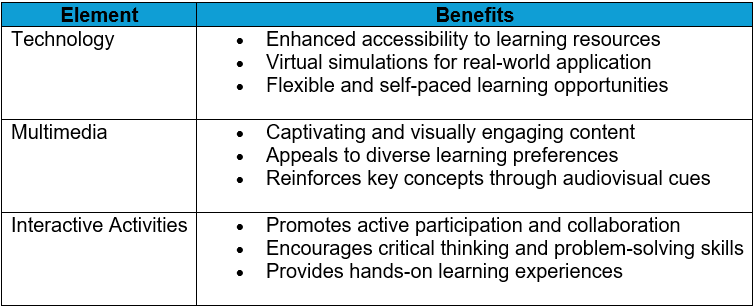
By leveraging technology, multimedia, and interactive activities, we can create stimulating learning environments that foster engagement, collaboration, and the application of knowledge. These elements not only captivate adult learners but also facilitate their growth and development in a way that is both enjoyable and impactful.
Incorporating Real-World Relevance
When it comes to adult learning, incorporating real-world relevance is vital. Connecting learning outcomes to practical applications enhances motivation and improves retention among adult learners. By bridging the gap between theory and real-life scenarios, adults can see the immediate impact and value of their learning.
Real-world relevance in adult learning provides a context for understanding and applying knowledge. It allows learners to see the direct connection between what they are learning and their personal and professional lives. This connection boosts engagement, as adults are more likely to be invested in their learning when they see how it benefits them.
"Learning for the sake of learning can be enjoyable, but when learning has real-world relevance, it becomes transformative."
By incorporating real-world relevance, instructional designers can create meaningful learning experiences that resonate with adult learners. Whether through case studies, simulations, or hands-on activities, providing opportunities for practical application enhances the overall learning experience.
Benefits of incorporating real-world relevance
There are several benefits to incorporating real-world relevance in adult learning:
Increased motivation: Adults are more motivated to learn when they see how it applies to their personal or professional lives.
Improved retention: Adults are more likely to remember and apply what they have learned when learning is connected to real-world scenarios.
Enhanced problem-solving skills: Real-world relevance fosters critical thinking and problem-solving skills as learners apply their knowledge to solve practical challenges.
Relevance to current trends: Incorporating real-world examples allows learners to stay up to date with their field's latest trends and practices.
By incorporating real-world relevance, instructional designers can create a dynamic and engaging learning environment that promotes deep understanding and meaningful application of knowledge. Let's take a look at an example:
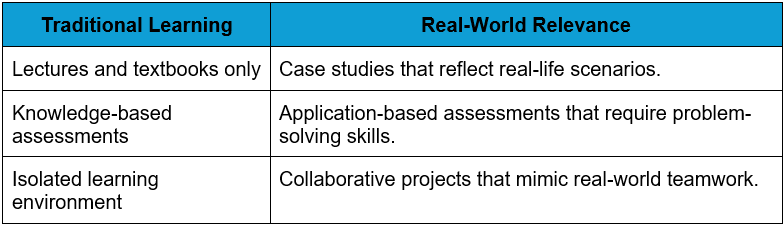
Incorporating real-world relevance in adult learning is crucial for creating meaningful and impactful educational experiences. Instructional Designers can foster motivation, retention, problem-solving skills, and relevance to current trends by connecting learning outcomes to practical applications. It's time to make learning more relevant and transformative for adult learners.
Fostering Collaborative Learning
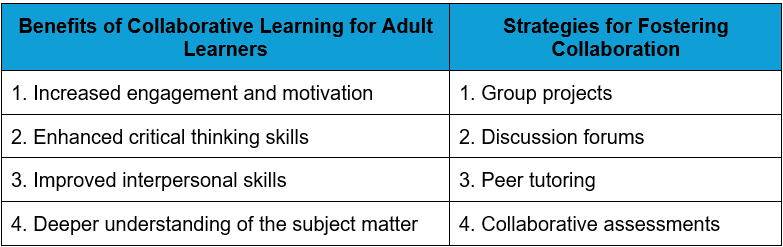
In adult learning, collaborative learning has emerged as a powerful approach that brings numerous benefits to learners. By engaging in collaborative activities and forming a supportive learning community, adults can enhance their understanding, develop critical thinking skills, and foster meaningful connections with their peers.
Collaborative learning allows adults to draw on their fellow learners' diverse experiences and perspectives, creating a rich and dynamic learning environment. This promotes a deeper exploration of the subject matter and encourages the exchange of ideas, leading to a broader understanding of the topic.
Through collaboration, adults also develop valuable interpersonal skills, such as effective communication, active listening, and conflict resolution. These skills enhance their learning experiences and have practical applications in their personal and professional lives.
Strategies for Fostering Collaboration
Here are some effective strategies for fostering collaborative learning among adult learners:
Group Projects: Assigning group projects encourages adults to work together, share their expertise, and take collective responsibility for the project's success.
Discussion Forums: Online discussion forums allow adults to engage in thoughtful discussions, share ideas, and provide feedback to their peers.
Peer Tutoring: Organize sessions where more experienced learners can assist those requiring additional support. This benefits the learner receiving help and reinforces the tutor's understanding of the topic.
Collaborative Assessments: Assign group assessments that require adults to collaborate and contribute their unique perspectives to solve complex problems or complete a project.
Incorporating these strategies into adult learning programs can create an active participation and collaboration atmosphere, enriching the learning experience for all involved.
"Collaboration is the key to fostering deep learning and enhancing the educational journey of adult learners."
Personalizing Learning Experiences
When it comes to adult learning, personalization holds immense power. Tailoring learning experiences to individual needs and preferences can significantly enhance engagement and accelerate learning outcomes. By recognizing adult learners' unique characteristics and backgrounds, we can create meaningful and relevant educational experiences that resonate on a personal level.
Personalizing learning experiences involves understanding learners' interests, goals, and learning styles. By incorporating these insights into the design and delivery of educational content, we can foster a deeper connection and sense of ownership over the learning process. This approach allows adults to take charge of their own learning journey and make the most out of their educational opportunities.
One effective way to personalize learning experiences is through adaptive learning technologies. These platforms use data and algorithms to dynamically adjust the content and pace of learning based on an individual's progress and needs. This ensures learners receive targeted support and challenge, maximizing their learning potential.
"Personalized learning is a powerful tool that helps adult learners see the relevance of their educational experiences and fuels their motivation to succeed."
Benefits of Personalized Learning
Personalization in adult learning offers a multitude of benefits. By catering to individual needs, it:
Enhances engagement: When learners feel that their unique needs and interests are considered, they are more likely to actively engage in the learning process.
Fosters motivation: Personalized learning experiences tap into learners' intrinsic motivation by giving them a sense of control and autonomy, leading to increased enthusiasm and dedication.
Accelerates learning outcomes: By addressing learners' specific learning gaps and challenges, personalization can expedite the acquisition of knowledge and skills.
Increases retention: Learners receiving content that aligns with their interests and needs are more likely to remember and apply what they have learned.
By embracing personalization in adult learning, we empower individuals to unlock their full potential, making learning a truly transformative experience.
Reflecting and Applying Knowledge
In adult learning, reflection and application are crucial in deepening understanding and facilitating meaningful growth. By encouraging learners to reflect on their learning experiences and apply new knowledge to real-life situations, we create opportunities for transformative learning.
Reflecting on what has been learned allows individuals to make connections, identify patterns, and gain insights into their learning process. It prompts critical thinking, self-awareness, and the ability to evaluate and analyze knowledge holistically. Through reflection, adults can extract valuable lessons and forge personal and professional development paths.
Reflective practice is not just about looking back at what has been learned; it's a deliberate process of questioning and exploring how that knowledge can be applied in real-world contexts.
Application, on the other hand, brings learning to life. When learners actively apply their knowledge in practical situations, they solidify their understanding and develop skills that can be used in their day-to-day lives. By translating knowledge into action, adults can test hypotheses, overcome challenges, and gain the confidence to tackle complex tasks.
Moreover, when adult learners engage in hands-on application, they tap into their innate problem-solving abilities and develop a more profound sense of ownership over their learning journey. This active involvement fosters a sense of empowerment and reinforces the relevance of their educational experiences.
Creating deliberate opportunities for reflection and application within adult learning environments is essential for sustainable growth. When coupled with engaging instructional strategies, such as project-based learning or case studies, reflecting and applying knowledge become powerful tools that enable adults to actively participate in their learning.
Key Benefits of Reflecting and Applying Knowledge:
Enhanced understanding and retention of information.
Development of critical thinking and problem-solving skills.
Increased confidence and ownership of learning.
Integration of knowledge into real-world contexts.
By consciously incorporating reflection and application into adult learning experiences, we empower learners to go beyond passively consuming information and truly internalize knowledge. Through this process of active engagement and application, adults can unlock their full potential and achieve meaningful growth.
Conclusion
Throughout this article, we have explored the transformative power of the law of intensity on adult learning. By understanding and applying this principle, adults have the potential to unlock their true learning potential and achieve greater engagement and success.
The law of intensity emphasizes the importance of creating highly engaging and immersive learning experiences. We can create stimulating learning environments that foster deep and impactful learning by designing and delivering learning experiences that captivate learners' attention and promote active engagement.
Incorporating real-world relevance, fostering collaborative learning, and personalizing learning experiences are additional strategies that can enhance adult learning outcomes. By connecting learning outcomes to practical applications, creating collaborative learning environments, and tailoring learning experiences to individual needs, we can create an environment that promotes motivation, retention and accelerated learning.
Furthermore, reflection, the application of knowledge, and evaluating learning effectiveness are crucial aspects of adult learning. Encouraging learners to reflect on their learning and apply new knowledge in real-life situations deepens their understanding. It allows for continuous improvement in the learning process.
In conclusion, the law of intensity holds great potential for transforming adult learning experiences. By embracing its principles and implementing strategies that promote engagement, relevance, collaboration, personalization, and reflection, we can create impactful and transformative learning experiences for adults.
FAQ
The law of intensity is a principle that highlights the importance of creating highly engaging and immersive learning experiences for adults. By designing learning activities that captivate learners' attention and promote active engagement, the law of intensity can enhance the learning experience and unlock adults' potential for deeper and more impactful educational experiences.
To apply the law of intensity in adult learning settings, designing and delivering learning experiences that stimulate learners' interest and promote active participation is essential. This can be achieved by incorporating interactive elements, multimedia, and technology to create stimulating learning environments. Additionally, connecting learning outcomes to real-world applications and fostering collaborative learning can further enhance the intensity of the learning experience.
Stimulating learning environments refer to the conditions and elements that promote engagement and active learning among adults. These environments often incorporate technology, multimedia, and interactive activities to create a dynamic and immersive learning experience. By providing an engaging and stimulating environment, adults are more likely to be motivated, retain information better, and have a more impactful learning experience.
Personalizing learning experiences involves tailoring the learning process to meet adult learners' individual needs, preferences, and goals. This can be achieved by offering flexible learning pathways, providing choices in assignments or projects, and adapting instructional content to match the learners' interests. By personalizing the learning experience, adults are more likely to feel engaged, motivated, and empowered to achieve their learning objectives.
Reflecting on learning experiences and applying knowledge in real-life situations are essential for adult learning. Reflection allows adults to analyze and make meaning of their learning, promoting deeper understanding and connection to real-world contexts. By applying new knowledge in practical situations, adults can reinforce learning, develop transferable skills, and see the relevance and value of what they have learned.
SHARE


Subscribe now.
Instructional design, learning development, theory and application, software, and more!
QUICK LINKS
Copyright © 2024 All Rights Reserved. Learning Developers Group and Learning Dev with Dr. D are owned and operated by Dean Reed, LLC