Learning and the Law of Primacy
Learning and the Law of Primacy
Did you know that the way information is initially learned can have a lasting impact on knowledge retention? This surprising fact underlines the significance of the Law of Primacy in adult learning. The Law of Primacy states that first impressions are strong impressions, and the initial learning experience plays a vital role in long-term knowledge retention. By understanding and applying this law, you can optimize your learning outcomes and enhance your ability to retain knowledge effectively.
Key Takeaways:
The Law of Primacy states that the first learning experience significantly impacts long-term knowledge retention.
Positive and engaging initial learning experiences set a solid foundation for further learning and knowledge acquisition.
Confusing or ineffective initial learning experiences can hinder learning and impede knowledge retention.
Instructional designers and educators should prioritize creating positive and engaging learning experiences to optimize learning outcomes.
Applying the Law of Primacy in instructional design involves creating effective learning experiences that make a lasting impression on learners.
The Six Laws of learning
When it comes to instructional design, the six laws of learning serve as fundamental principles that guide the creation of effective instruction. They must be taken into consideration when designing instructional materials and activities. (Click on a law to learn more.)
The Law of Exercise: This law emphasizes the importance of repetition and practice in learning. The more frequently a stimulus and response are associated, the stronger the association becomes.
The Law of Effect: This law states that positive reinforcement increases the likelihood of repeated behavior, while negative reinforcement decreases it.
The Law of Readiness: According to this law, learners must be mentally and physically ready to learn to effectively acquire and retain information.
The Law of Primacy: The law of primacy dictates that information learned first is more likely to be remembered and have a lasting impact.
The Law of Intensity:This law suggests that intense and emotionally charged experiences are more memorable and impactful for learners.
The Law of Recency: The law of recency emphasizes that information learned most recently is more likely to be retained and recalled.
What is the Law of Primacy?
The Law of Primacy is a psychological principle emphasizing the significance of first impressions in learning. According to this law, a person's initial learning experience with a specific subject or concept greatly influences their subsequent understanding and retention of that information. In other words, the initial learning experience creates a lasting and powerful impression that is challenging to alter or erase.
Suppose the initial learning experience is positive and engaging. In that case, the learner is more likely to retain the knowledge in the long term. Conversely, suppose the initial experience is negative or ineffective. In that case, it can impede the learner's ability to grasp the subject matter effectively.
Understanding the Law of Primacy is vital for instructional designers and educators as it enables them to create learning experiences that facilitate knowledge retention and maximize learning outcomes.
Why is the Law of Primacy Important to Learning?
The Law of Primacy, a fundamental principle in psychology, holds great significance in learning. It directly influences learning outcomes and knowledge retention, shaping how learners perceive and understand new information or concepts.
When learners are introduced to a subject or topic for the first time, their initial learning experience forms the basis for all subsequent learning. If this experience is positive, engaging, and well-organized, it lays a solid foundation for further knowledge acquisition. The learner's mind becomes receptive to the information. It is more likely to remember and build upon it, leading to enhanced learning outcomes.
Conversely, suppose the initial learning experience is confusing, uninteresting, or poorly presented. In that case, it creates obstacles to learning and hinders knowledge retention. A negative or ineffective first impression can set a negative tone for the entire learning process, making it harder for learners to grasp the subject matter and retain information.
The Law of Primacy emphasizes the importance of creating positive and engaging learning experiences. It highlights the need for educational institutions, instructors, and instructional designers to prioritize the quality of the initial learning experience. By doing so, they can optimize learning outcomes and foster effective knowledge retention among learners.
How to Apply the Law of Primacy in Instructional Design?
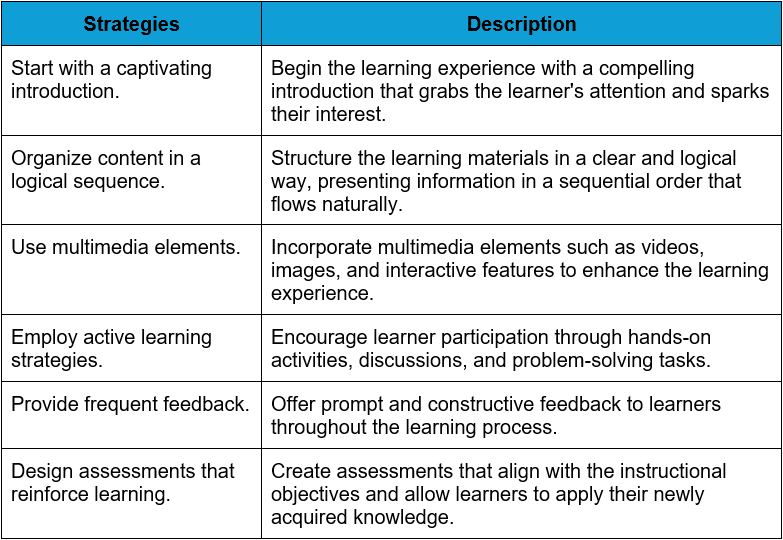
To apply the Law of Primacy in instructional design, educators and instructional designers should focus on creating effective learning experiences that make a positive and lasting first impression on learners. Here are some strategies to incorporate the Law of Primacy in instructional design:
Start with a captivating introduction: Begin the learning experience with a compelling introduction that grabs the learner's attention and sparks their interest. Use storytelling, real-life examples, or thought-provoking questions to engage learners from the start.
Organize content in a logical sequence: Structure the learning materials clearly and logically, presenting information in a sequential order that flows naturally. This helps learners establish connections between different concepts and facilitates their understanding.
Use multimedia elements:Incorporate multimedia elements such as videos, images, and interactive features to enhance the learning experience. Visual and interactive content makes the learning process more engaging and aids in information retention.
Employ active learning strategies:Encourage learner participation through hands-on activities, discussions, and problem-solving tasks. Active learning promotes deeper engagement and better knowledge retention than passive listening or reading.
Provide frequent feedback: Offer prompt and constructive feedback to learners throughout the learning process. Feedback helps learners assess their progress, identify areas for improvement, and reinforce their learning.
Design assessments that reinforce learning: Create assessments that align with the instructional objectives and allow learners to apply their newly acquired knowledge. Assessments should be challenging yet achievable, providing opportunities for learners to demonstrate their understanding and build confidence.
Conclusion
The Law of Primacy is a critical component of adult learning and knowledge retention. By understanding and applying this principle, educators and instructional designers can create more effective learning experiences that leave a positive and lasting first impression on learners.
Building a solid foundation through engaging and well-organized learning activities is critical to enhancing knowledge retention and overall learning outcomes. When adult learners have a positive initial experience with new information or concepts, they are more likely to develop a solid understanding and retain that knowledge in the long term.
As you continue your educational journey, remember the importance of the Law of Primacy. Prioritizing the initial learning experience can set the stage for long-term success. Creating engaging and well-structured learning activities can optimize your learning outcomes and enhance your ability to retain knowledge.
FAQ
The Law of Primacy is a psychological principle emphasizing the importance of first impressions in learning. It suggests that the initial learning experience significantly impacts subsequent understanding and retention of information.
The Law of Primacy influences learning outcomes and knowledge retention. If the initial learning experience is positive and engaging, learners are more likely to retain the information in the long term. On the other hand, a negative or ineffective initial experience can hinder the learner's ability to grasp the subject matter.
The Law of Primacy is important because it directly affects learning outcomes and knowledge retention. By creating positive and engaging learning experiences, educators can optimize learning outcomes and facilitate long-term knowledge acquisition.
Instructional designers can incorporate the Law of Primacy by creating effective learning experiences that make a positive first impression on learners. Strategies include engaging content, organizing information effectively, and designing interactive learning activities.
Source Links
SHARE


Subscribe now.
Instructional design, learning development, theory and application, software, and more!
QUICK LINKS
Copyright © 2024 All Rights Reserved. Learning Developers Group and Learning Dev with Dr. D are owned and operated by Dean Reed, LLC