Learning and the Law of Readiness
Did you know that the law of readiness is one of the six fundamental laws of learning? This powerful principle profoundly impacts instructional design and can significantly influence the effectiveness of learning experiences. By understanding and applying the law of readiness, instructors can create a positive and engaging learning environment that optimizes learner learning outcomes.
Key Takeaways:
The law of readiness is one of the six laws of learning that guides instructional design.
Learners learn best when they are mentally and physically prepared and ready to learn.
Clear objectives and rationale are essential in creating a positive learning atmosphere.
Motivation and engagement play a crucial role in the law of readiness.
By incorporating the law of readiness into instructional design, instructional designers can enhance learner engagement and overall learning outcomes.
The Six Laws of Learning
When it comes to instructional design, the six laws of learning serve as fundamental principles that guide the creation of effective instruction. These laws play a crucial role in facilitating learning. They must be taken into consideration when designing instructional materials and activities. (Click on a law to learn more.)
The Law of Effect:This law states that positive reinforcement increases the likelihood of repeated behavior, while negative reinforcement decreases it.
The Law of Exercise: This law emphasizes the importance of repetition and practice in learning. The more frequently a stimulus and response are associated, the stronger the association becomes.
The Law of Readiness: According to this law, learners must be mentally and physically ready to learn to effectively acquire and retain information.
The Law of Primacy:The law of primacy dictates that information learned first is more likely to be remembered and have a lasting impact.
The Law of Intensity: This law suggests that intense and emotionally charged experiences are more memorable and impactful for learners.
The Law of Recency: The law of recency emphasizes that information learned most recently is more likely to be retained and recalled.
“Motivation is the fuel that drives learning. When learners are motivated, they actively participate in the learning process and achieve better results.”
Each law highlights a different aspect of the learning process and contributes to the overall understanding of how instructional design can be optimized for better learning outcomes. Understanding and applying these laws are essential for instructional designers to create effective and impactful learning experiences.
Law of Readiness in Instructional Design
The law of readiness is a foundational principle in instructional design that highlights the importance of preparing learners mentally and physically for optimal learning experiences. As an instructional designer, it is crucial to consider the readiness level of your learners and tailor your instruction to meet their individual abilities and interests.
When designing instructional materials and activities, ensure they align with the learners’ readiness. This involves providing clear objectives and rationale to create a positive learning atmosphere and motivate learners. Addressing the law of readiness in instructional design can enhance engagement, motivation, and overall learning outcomes.
The Role of Motivation in the Law of Readiness
The law of readiness emphasizes the importance of being mentally and physically prepared to learn. However, readiness alone is not enough to ensure effective learning. Motivation plays a crucial role in the law of readiness, driving learners to actively engage in learning and achieve better results.
Learners who feel motivated to learn are more likely to be receptive to instruction and demonstrate a higher level of persistence and effort. Their intrinsic desire to learn fuels their engagement and enhances their overall learning experience.
To support the law of readiness, instructional designers should incorporate motivational strategies and techniques into their instructional materials. By understanding and addressing the motivational aspects of learning, instructors can create a positive and engaging learning environment for their learners.
Addressing Motivation Through Instructional Design
There are various ways instructional designers can foster motivation in their instructional materials. One effective strategy is to set clear and meaningful learning objectives that highlight the relevance and importance of the content. When learners understand the purpose of their learning, they are more likely to feel motivated to engage with the material.
Instructional designers can also incorporate real-life examples and relatable scenarios into their materials. By making the content relevant to learners’ lives and experiences, instructors can effectively capture their interest and motivation to learn.
Additionally, interactive activities that promote learner collaboration and participation can enhance motivation. By providing opportunities for learners to engage with the content in an interactive and hands-on manner, instructional designers can stimulate their curiosity and motivation to explore and learn.
Furthermore, providing feedback recognizing learners’ efforts and achievements can fuel their motivation. Encouraging their progress and acknowledging their successes helps foster a sense of accomplishment and inspires them to continue their learning journey.
The Power of Motivation in the Law of Readiness
The law of readiness is inherently linked to motivation. When learners feel ready and motivated to learn, they are more likely to embrace challenging tasks, persevere through difficulties, and actively seek knowledge. This motivation-driven mindset enhances the effectiveness of the law of readiness and significantly contributes to learners’ overall learning outcomes.
By considering the role of motivation in the law of readiness, instructional designers can create materials that inspire and engage learners. By understanding and addressing the motivational aspects of learning, instructors can tap into learners’ intrinsic motivation and create a dynamic and enriching learning environment.
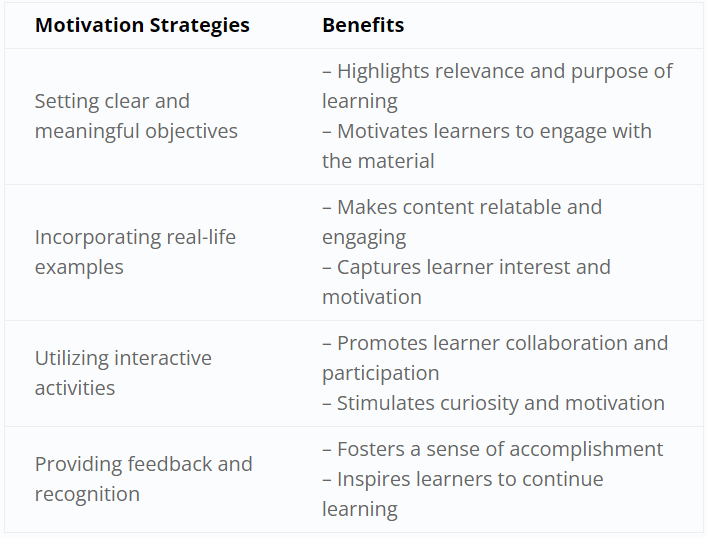
By integrating these motivational strategies into instructional materials, instructors can create a positive and engaging learning environment that nurtures learners’ motivation and maximizes the benefits of the law of readiness.
The Connection Between the Law of Readiness and Learner Engagement
The law of readiness is closely connected to learner engagement, as it plays a crucial role in facilitating effective learning experiences. When learners are mentally and physically prepared to learn, they are more likely to be actively engaged in learning, leading to better acquisition and retention of information.
To promote learner engagement, instructional designers should incorporate various strategies aligned with the law of readiness. Interactive activities, such as quizzes, simulations, or group discussions, can encourage active participation and foster a deeper understanding of the content. Real-world examples and case studies can help learners see the relevance and applicability of their learning, increasing their motivation to engage with the material.
Collaborative learning opportunities, where learners work together on projects or problem-solving tasks, can also enhance learner engagement by promoting peer interaction and exchanging ideas. By engaging learners in collaborative learning, instructional designers can tap into their natural inclination for social interaction and create a dynamic and interactive learning environment.
“Engagement is the key to effective learning. By aligning instructional design with the law of readiness, instructors can foster a dynamic and engaging learning experience.”
– Dr. Jennifer Smith, Education Expert
When instructional design is aligned with the law of readiness, instructors can create a positive and stimulating learning environment that maximizes learner engagement. By promoting engagement through interactive activities, real-world examples, and collaborative learning experiences, instructional designers can empower learners to actively participate in their learning journeys and achieve meaningful learning outcomes.
Implementing the Law of Readiness in Instructional Design Strategies
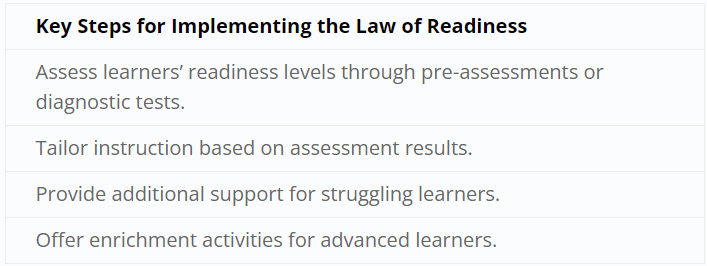
Incorporating the law of readiness into instructional design strategies is crucial to promoting effective learning outcomes. To ensure successful implementation, instructional designers should follow a systematic approach that considers the learners’ readiness level and tailors the instruction accordingly. By assessing learners’ readiness through pre-assessments or diagnostic tests, instructors can gain valuable insights into their current knowledge and skills.
Based on the assessment results, instructional designers can develop personalized learning experiences that cater to the specific needs of each learner. For learners who may be struggling, additional support and intervention can be provided to help them bridge their knowledge gaps and build a strong foundation. Enrichment activities can also be offered to advanced learners, challenging them to explore and expand their understanding.
By aligning instructional design strategies with the law of readiness, instructors can create engaging and compelling learning experiences. The following list provides some key considerations for implementing the law of readiness:
Assessing learners’ readiness level through pre-assessments or diagnostic tests
Tailoring instruction based on assessment results
Providing additional support for struggling learners
Offering enrichment activities for advanced learners
“Effective implementation of the law of readiness requires careful planning and consideration of learners’ needs. By addressing their readiness level, instructional designers can create a learning environment that promotes optimal engagement and meaningful learning experiences.”
By integrating the law of readiness into instructional design strategies, instructors can create a supportive and inclusive learning environment that caters to the diverse needs of their learners. Through personalized instruction and targeted interventions, the law of readiness becomes a powerful tool for enhancing learning outcomes and fostering learner success.
Enhancing Instructional Materials with the Law of Readiness
The law of readiness is a key principle in instructional design, and it can be effectively integrated into instructional materials to optimize learning experiences. When designing instructional materials, designers should consider the law of readiness to ensure that the materials are appropriately challenging and aligned with the learners’ abilities.
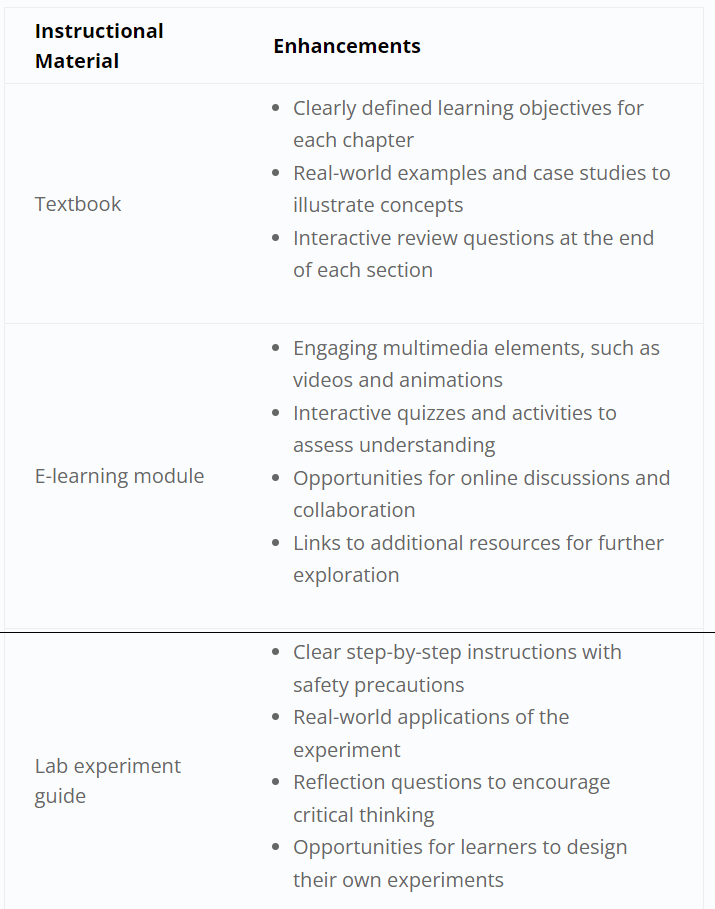
Clear objectives and rationale should be provided in the instructional materials to help learners understand the purpose and relevance of the content. Instructors can enhance learners’ motivation and engagement by clearly outlining the learning objectives and explaining why the material is essential.
Incorporating various multimedia elements, such as videos, interactive simulations, and animations, can make instructional materials more engaging and dynamic. These multimedia elements provide visual and auditory stimuli to help learners better understand and retain the presented information.
Interactive components, such as quizzes, games, and discussions, can also be included in instructional materials to actively involve learners in learning. By allowing learners to interact with the content, instructional designers can increase engagement and promote deeper understanding.
“The law of readiness emphasizes the importance of creating instructional materials that consider learners’ readiness level and provide clear objectives and rationale.”
Real-world examples and case studies can be incorporated into instructional materials to make the content more relatable and applicable. By presenting real-life scenarios and practical applications, instructional designers can help learners see the relevance of the content to their own lives and future careers.
By considering the law of readiness when designing instructional materials, instructors can create impactful learning resources that are appropriately challenging, engaging, and aligned with learners’ abilities and interests. These materials can optimize learning experiences and support learners’ academic success.
Examples of Enhancing Instructional Materials with the Law of Readiness:
The Law of Readiness and Personalized Learning
The law of readiness aligns perfectly with the concept of personalized learning. Personalized learning prioritizes tailoring instruction to meet individual learners’ unique needs and interests. Incorporating the law of readiness into instructional design allows you to create customized learning experiences that actively engage learners and address their specific readiness levels.
This can be achieved through various strategies, such as:
Adaptive learning technologies: Utilize technology platforms that adjust the learning pace and content based on individual learner progress and readiness.
Differentiated instruction: Implement teaching methods and materials that cater to learners’ diverse readiness levels, allowing them to access information at a level that challenges and supports their growth.
Individualized learning paths: Provide learners with a personalized roadmap that outlines their learning goals and progress, enabling them to navigate their educational journey at their own pace.
By embracing the law of readiness and incorporating personalized learning approaches into instructional design, you can empower learners to take ownership of their learning and actively participate in the educational process.
Customized learning experiences foster learner engagement and motivation and optimize learning outcomes.
Assessing the Impact of the Law of Readiness
Evaluating the impact of instructional design strategies aligned with the law of readiness is crucial in measuring the effectiveness of learning experiences. By analyzing learners’ performance, engagement levels, and feedback, instructional designers can gain valuable insights into the outcomes of their design choices.
Formative and summative assessments provide objective data to determine how well the instructional design strategies have influenced learning outcomes. Formative assessments, such as quizzes and class discussions, offer continuous feedback to learners and instructors, enabling timely adjustments to enhance learning. Summative assessments, like exams or projects, assess overall achievement and provide a comprehensive view of learner learning.
When applied in instructional design, the law of readiness aims to optimize learning outcomes. When learners are mentally and physically prepared, engaged, and motivated, they are more likely to acquire and retain knowledge effectively. By assessing the impact of the law of readiness, instructional designers can refine their strategies, ensuring that they align with the desired learning outcomes.
“Measuring the impact of the law of readiness in instructional design assists instructors in creating meaningful learning experiences that lead to positive learner outcomes.”
– Dr. Amanda Johnson, Instructional Design Specialist
Through data analysis, instructors can identify strengths and areas for improvement in their instructional design practices. This feedback loop allows for continuous reflection and adaptation, leading to the refinement of instructional design strategies. Ultimately, assessing the impact of the law of readiness helps instructional designers tailor their approaches to meet individual learners’ needs and maximize learning outcomes.
The Future of Instructional Design and the Law of Readiness
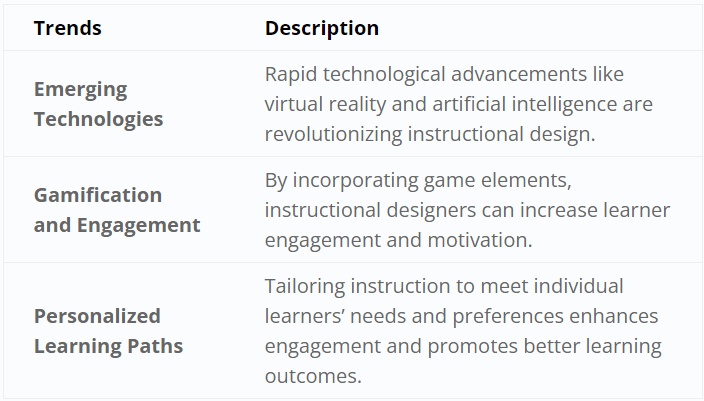
As instructional design continues to evolve, the law of readiness will remain a fundamental principle. Future trends in instructional design may involve leveraging emerging technologies, incorporating gamification, or integrating artificial intelligence. However, the underlying principles of the law of readiness, such as considering learners’ readiness and motivation, will continue to shape effective instructional design practices. By staying informed and adaptable, instructional designers can harness the potential of the law of readiness to transform the future of education.
Emerging Technologies in Instructional Design
Rapid advancements in technology are revolutionizing the field of instructional design. Virtual reality, augmented reality, and artificial intelligence are just a few examples of emerging technologies that can enhance the learning experience. These technologies have the potential to create immersive and interactive learning environments, providing learners with realistic scenarios and personalized feedback. Instructional designers can leverage these technologies to align with the law of readiness and cater to individual learning needs.
Gamification and Engagement
Gamification is another trend that has gained traction in instructional design. Instructional designers can increase learner engagement and motivation by incorporating game elements into the learning process, such as leaderboards, badges, and rewards. Gamification taps into learners’ natural inclination for competition, achievement, and exploration, making the learning experience more enjoyable and effective. Aligning gamification strategies with the law of readiness ensures that learners are adequately prepared and motivated to participate in game-based activities.
Personalized Learning Paths
Personalized learning has emerged as a powerful instructional design approach that aligns with the law of readiness. By tailoring instruction to meet individual learners’ needs and preferences, instructional designers can enhance engagement and promote better learning outcomes. Personalized learning paths allow learners to progress at their own pace, focusing on areas where they need more support or challenge. Through adaptive learning technologies and data analytics, instructional designers can create personalized learning environments that optimize the law of readiness.
Conclusion
Understanding and applying the principles of the law of readiness is crucial in instructional design and the other five laws of learning. By prioritizing readiness, motivation, and engagement in the design of learning experiences, instructors can unlock the potential of instructional design and create impactful learning environments.
The law of readiness highlights the importance of learners being mentally and physically prepared to learn. Clear objectives and rationale are vital in creating a positive learning atmosphere. In contrast, personalized learning experiences address individual learners’ readiness levels.
Instructors can enhance engagement, motivation, and overall learning outcomes by integrating the law of readiness into instructional materials and strategies. Assessing the impact of the law of readiness allows for continuous improvement in instructional design practices, ensuring that learning experiences align with learners’ needs and interests.
FAQ
What is the law of readiness?
The law of readiness is one of the six laws of learning. It emphasizes the importance of learners being mentally and physically prepared to learn.
How does the law of readiness impact instructional design?
The law of readiness highlights the need for instructional designers to consider learners’ readiness levels and create learning experiences that align with their abilities and interests.
What is the role of motivation in the law of readiness?
Motivation plays a crucial role in the law of readiness, as learners who feel ready and motivated are more receptive to instruction and achieve better results.
What is the connection between the law of readiness and learner engagement?
The law of readiness emphasizes that learners are more likely to acquire and retain information effectively when they are ready to learn and actively engaged.
How can the law of readiness be implemented in instructional design strategies?
Instructional designers can implement the law of readiness by assessing learners’ readiness levels and tailoring instruction to meet their needs.
How can instructional materials be enhanced with the law of readiness?
Instructional designers can enhance materials by ensuring they are appropriately challenging, aligned with learners’ abilities, and offer clear objectives and rationale.
How does the law of readiness relate to personalized learning?
The law of readiness aligns well with personalized learning, as instructional designers can design customized experiences based on individual learners’ readiness levels and interests.
What is the significance of the law of readiness in instructional design?
The law of readiness and the other five laws of learning are vital components of instructional design. Understanding and applying this law can greatly enhance instructional design strategies and promote positive learning outcomes.
Source Links
Cheers,
Dr. D
SHARE


Subscribe now.
Instructional design, learning development, theory and application, software, and more!
QUICK LINKS
Copyright © 2024 All Rights Reserved. Learning Developers Group and Learning Dev with Dr. D are owned and operated by Dean Reed, LLC