Learning and the Law of Recency
Did you know that the things you learn last are the ones you remember the best? It's true! According to the six laws of learning, one of the most powerful principles is the Law of Recency. By understanding and applying this law, instructors can significantly improve instructional design and enhance the effectiveness of education.
In this article, we will explore the six laws of learning, with a specific focus on the Law of Recency. We will delve into how this law can be integrated into instructional design, its impact on the learning process, and practical strategies for implementation. So, whether you're an educator, instructional designer, or simply curious about the science of learning, this article will provide valuable insights into maximizing the impact of the Law of Recency.
Key Takeaways:
The Law of Recency states that the things learned last are the best remembered.
Repeating, restating, and reemphasizing learning objectives can enhance information retention.
The Law of Recency is a fundamental principle in instructional design.
Regular review sessions, active recall activities, and restating objectives are strategies to optimize the impact of the Law of Recency.
The Law of Recency has significant benefits in terms of retention, comprehension, and overall effectiveness of learning.
The Six Laws of Learning
When it comes to instructional design, the six laws of learning serve as fundamental principles that guide the creation of effective instruction. They must be taken into consideration when designing instructional materials and activities. (Click on a law to learn more.)
The Law of Exercise:This law emphasizes the importance of repetition and practice in learning. The more frequently a stimulus and response are associated, the stronger the association becomes.
The Law of Effect: This law states that positive reinforcement increases the likelihood of repeated behavior, while negative reinforcement decreases it.
The Law of Readiness: According to this law, learners must be mentally and physically ready to learn to effectively acquire and retain information.
The Law of Primacy: The law of primacy dictates that information learned first is more likely to be remembered and have a lasting impact.
The Law of Intensity: This law suggests that intense and emotionally charged experiences are more memorable and impactful for learners.
The Law of Recency: The law of recency emphasizes that information learned most recently is more likely to be retained and recalled.
Instructors can create engaging and effective learning experiences that optimize the learning process by understanding and incorporating these laws into instructional design.
Law of Recency and Effective Instructional Design
The Law of Recency is a fundamental concept in instructional design that holds significant importance in creating effective learning experiences. By understanding and applying the Law of Recency, instructors can enhance the retention and recall of information.
One key aspect of incorporating the Law of Recency in instructional design is repetition. By repeating and reinforcing the learning objectives, instructors can ensure that the most recent information is fresh in the learners' minds. Repetition helps solidify the knowledge and increases the chances of long-term retention.
Another effective strategy is rephrasing and restating key concepts. By presenting the information in different ways, instructors can engage learners' attention and facilitate better understanding. This approach helps learners make connections and meaningfully process the content.
In addition to repetition and rephrasing, reviewing, and summarizing key concepts is crucial. Regular reviews help learners refresh their memory and reinforce their understanding of the material. Summarizing the main points at the end of each session or module helps create a strong recency effect on learners, ensuring that important information is retained.
To fully optimize the impact of the Law of Recency, instructional designers can also utilize various instructional strategies such as spaced repetition and active recall activities. Spaced repetition involves revisiting previously learned material at specific intervals, reinforcing the recency effect, and strengthening memory consolidation. Active recall activities, such as quizzes or discussions, engage learners in actively retrieving information, promoting deeper understanding and retention.
"Incorporating the Law of Recency in instructional design can greatly improve the effectiveness of education. By strategically applying repetition and reinforcing key concepts, instructors can enhance learners' retention and recall, leading to more impactful and successful learning experiences." - Dr. Jane Thompson, Instructional Design Expert
Strategies for Incorporating the Law of Recency
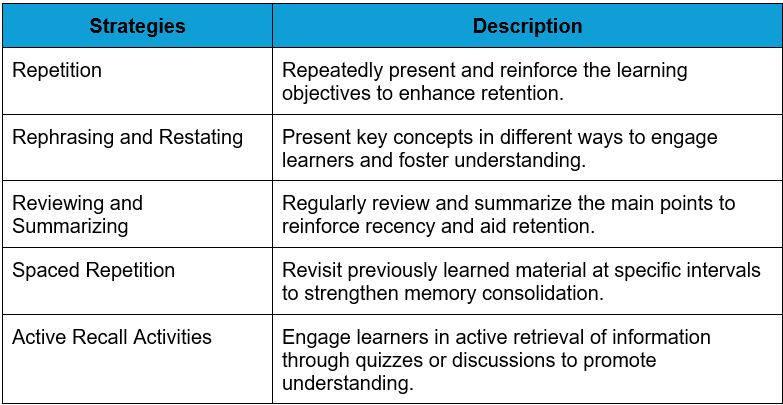
By incorporating these strategies in instructional design, instructors can harness the power of the Law of Recency to create engaging, effective, and long-lasting learning experiences for their learners.
Law of Recency in Practice
The Law of Recency can be effectively implemented in instructional design by incorporating various strategies. These strategies reinforce the most recently learned information, enhancing retention and recall. By providing opportunities for learners to review, recap, and restate key points, instructors can optimize the impact of the Law of Recency and promote meaningful learning.
Review Activities
One way to apply the Law of Recency is through review activities. These activities can be quizzes, games, or discussions that engage learners in revisiting and reinforcing the concepts they have recently learned. By actively recalling and applying the information, learners solidify their understanding and improve long-term retention.
Recapping Key Points
Another effective strategy is to recap the key points at the end of a lesson or module. By summarizing the main ideas and highlighting the connections between them, instructors help learners reinforce their understanding and refresh their memory. This recap serves as a reminder of the most important concepts and ensures their recency in the learners' minds.
Restating Learning Objectives
Instructors can also apply the Law of Recency by restating the learning objectives throughout the lesson. By emphasizing the goals and desired outcomes, instructors create a clear framework for learners to anchor their understanding. Restating the objectives in different ways and at various points in the lesson reinforces their importance and helps learners prioritize the most recent information.
"The Law of Recency reminds us to prioritize the most recently learned information. By incorporating review activities, recapping key points, and restating learning objectives, instructors can enhance retention and promote meaningful learning."
Implementing these strategies ensures that the most relevant and recently learned information is consistently emphasized and reinforced. This approach capitalizes on the power of the Law of Recency and maximizes its impact on the overall learning experience.
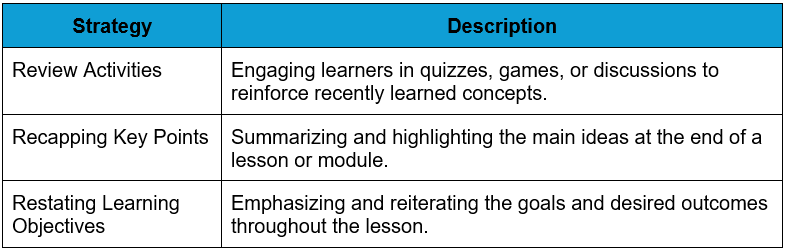
By incorporating these strategies, instructors can effectively apply the Law of Recency and enhance the learning experience for their learners.
The Impact of the Law of Recency on Learning
The Law of Recency suggests that the things learned last have a greater chance of being remembered. This directly impacts the learning process, as it emphasizes the importance of reviewing and revisiting key concepts. Learners can solidify their understanding and retention of the material by prioritizing the most recent information.
When it comes to learning, the Law of Recency plays a vital role in reinforcing knowledge and enhancing long-term memory. By focusing on the most recently acquired information, learners can reinforce their understanding and make it more likely to be retained over time.
The Law of Recency supports the idea that repetition is crucial in learning. By revisiting and reviewing newly learned concepts, learners can reinforce their mental pathways, strengthening the connections between neurons and improving their ability to recall information when needed.
Implementing the Law of Recency in educational settings can be done through various strategies. For example, incorporating regular review sessions and providing opportunities for learners to summarize and restate key concepts can help reinforce the most recent information. Additionally, engaging in activities that require active recall, such as quizzes or discussions, can further strengthen the impact of the Law of Recency on learning.
The Law of Recency reminds us that learning is an ongoing process. It is not enough to simply introduce new information; we must also take the time to revisit and reinforce what has been learned. By prioritizing the most recent material, we can solidify our understanding and improve our ability to remember and apply knowledge in real-world situations.
Learners can enhance their understanding and retention of knowledge by prioritizing the most recently acquired information and incorporating strategies that reinforce and review key concepts. Understanding and applying the Law of Recency is valuable for instructors and learners, as it promotes effective learning and knowledge consolidation.
Strategies for Applying the Law of Recency
When it comes to applying the Law of Recency in your instruction, there are several effective strategies you can utilize. These strategies will help you reinforce and emphasize the most recent information, optimizing the impact of the Law of Recency on your learners' learning experience.
1. Incorporate Regular Review Sessions: Schedule dedicated review sessions where you revisit and summarize the key concepts covered in previous lessons. Regularly reviewing the material reinforces the most recent information and ensures it remains fresh in your learners' minds.
2. Engage in Active Recall Activities: Encourage learners to actively recall and retrieve information through quizzes, practice exercises, or group discussions. This not only promotes deeper understanding but also reinforces the most recent material, making it more likely to be remembered.
3. Create Opportunities for Learners to Restate and Reinforce Learning Objectives: Provide opportunities for your learners to articulate and explain the learning objectives in their own words. Restating and reinforcing the objectives helps solidify their understanding and retention of the most recent information.
By implementing these strategies, you can effectively apply the Law of Recency in your teaching and maximize its impact on your learners' learning outcomes. Incorporating regular review sessions, engaging in active recall activities, and creating opportunities for learners to restate and reinforce learning objectives will ensure that the most recent information remains at the forefront of their minds.
Maximizing the Benefits of the Law of Recency
The Law of Recency, when applied effectively, offers numerous advantages that can enhance the learning experience. By prioritizing the most recent information, this law improves retention and recall of knowledge, leading to better overall understanding and comprehension.
Instructors who capitalize on the power of recency can create a more engaging and impactful learning environment. Reinforcing the most recently learned concepts helps learners solidify their understanding, making it easier to apply the newly acquired knowledge in practical situations.
"The Law of Recency allows learners to focus on the most important and relevant information, ensuring that it stays fresh in their minds."
In addition to enhancing retention, the Law of Recency also promotes active learning. By repeatedly exposing learners to the most recent material, instructors create opportunities for reflection, consolidation, and reinforcement. This active engagement with the subject matter promotes deeper understanding and encourages critical thinking.
The benefits of the Law of Recency extend beyond individual learners. By incorporating recency-focused strategies into instructional design, instructors can optimize the effectiveness of their teaching methods. This ultimately leads to improved learning outcomes and increased student satisfaction.
Conclusion
The Law of Recency is a crucial principle in instructional design that emphasizes the reinforcement of recent information. By incorporating regular reviews, restating key concepts, and prioritizing the most recent material, instructors can optimize the impact of the Law of Recency by keeping the most recent information fresh in learners' minds.
As instructional design continues to evolve, the Law of Recency will remain a fundamental principle. Technology integration and personalized learning can leverage the Law of Recency to its full potential. Adaptive algorithms and individualized instruction can tailor content and reinforcement activities based on learners' progress and the recency of their learning. This personalized approach enhances the effectiveness of education, providing learners with a more tailored, engaging, and impactful learning experience.
The Law of Recency emphasizes the importance of reviewing and reinforcing the most recent information to enhance retention and recall in instructional design.
The Law of Recency can be integrated into various learning settings, including traditional classrooms, online courses, and training programs.
Instructors can apply the Law of Recency by incorporating regular review sessions, engaging in active recall activities, and restating and reinforcing the learning objectives.
Applying the Law of Recency improves the retention and recall of information, enhances understanding and comprehension, and increases the overall effectiveness of the learning experience.
SHARE


Subscribe now.
Instructional design, learning development, theory and application, software, and more!
QUICK LINKS
Copyright © 2024 All Rights Reserved. Learning Developers Group and Learning Dev with Dr. D are owned and operated by Dean Reed, LLC